Best 10 / Table journal

A table, a deck, and time to stay awhile

Best 10 Rankings is an Australian restaurant and atmospheric digital dining journal for evenings that unfold face to face. Here, classic cards sit beside shared plates, unhurried conversation and the quiet card-room ambience of a table held in person at the restaurant.

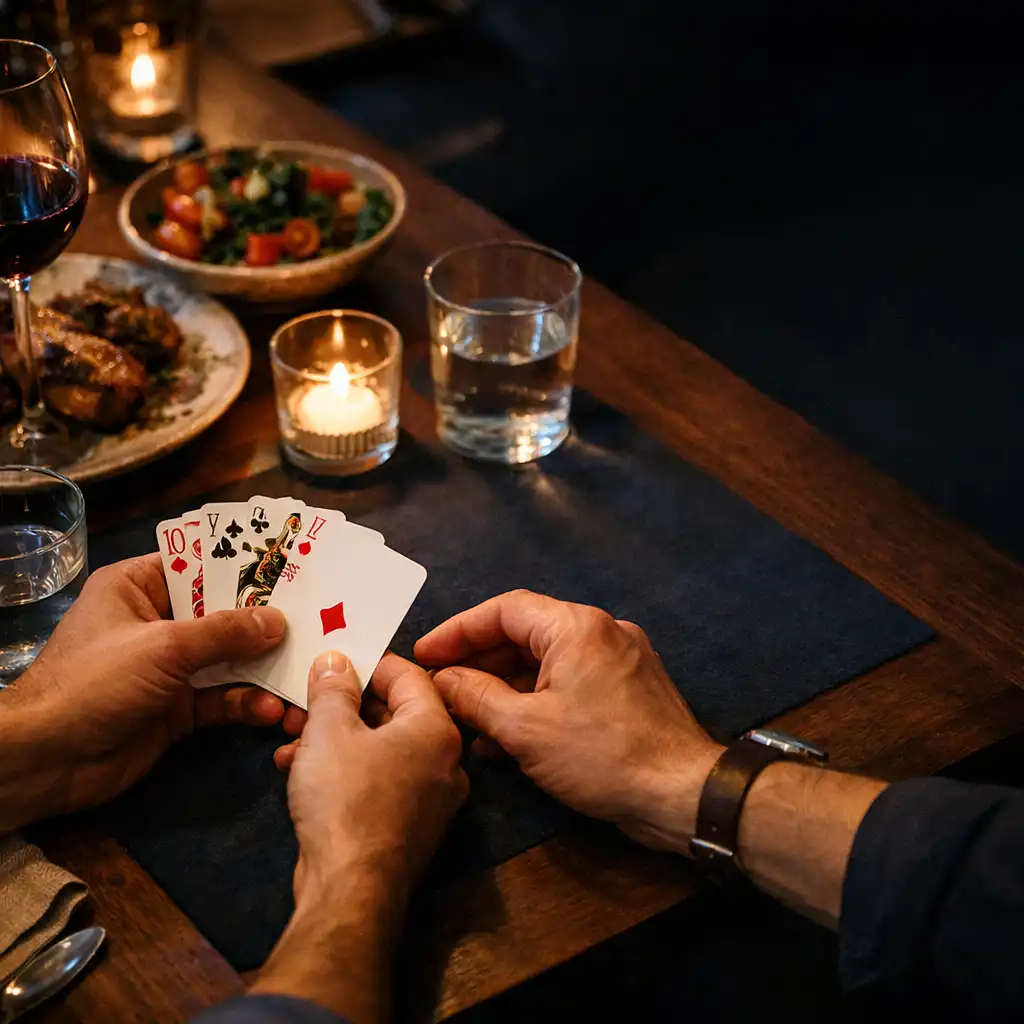
Guests' hands arranging traditional playing cards beside shared dishes and glassware on a dark restaurant table.

The index

How this Best 10 is read

These selections value table rhythm, guest familiarity and the room a game leaves for food and conversation. Think of them as an editorial route through ten recognisable games: prompts for sociable, hosted tables in the restaurant, rather than a test of intensity.

  1. 01RummyEasy turns, room to talk.
  2. 02BridgePartners and settled attention.
  3. 03CanastaPatterns across a longer sitting.
  4. 04CribbageA tactile two-person pause.
  5. 05Gin RummyBright rounds for two.
  6. 06EuchreCompact, partner-led energy.
  7. 07WhistClassic calm in company.
  8. 08PinochleRecognition and long exchange.
  9. 09Go FishClear turns, easy invitations.
  10. 10Old MaidPlayful stories around the table.

Ranks 01–06

The long-table classics

The first half of the ranking favours familiar patterns, paired attention and a pace that can settle comfortably around a meal.

01

Rummy

Rummy earns the first place because its turns feel adaptable to an evening already in motion. A group can return to the table after a dish arrives, notice a new pattern, then let the conversation drift somewhere else. Its familiarity keeps the ritual light: cards become a shared thread rather than the centre of attention, leaving room for stories, glasses lifted and the easy observation of a lively dining room.

Table mood: easy turns between courses
02

Bridge

Bridge brings the particular warmth of partnered concentration. It suits a settled group that enjoys noticing one another’s attention without making every moment loud. Around a long table, the appeal is the small rhythm of partnership: a pause, a look across the setting, then a return to the company at hand. The result can feel composed and companionable, with enough structure to gather people together and enough quiet to let dinner remain the evening’s anchor.

Table mood: partners, pauses and focus

03

Canasta

Canasta has a generous, pattern-building quality that can run gently through a longer sitting. The pleasure is in recognising what the table is slowly assembling together, not in rushing toward a conclusion. That makes it a natural companion for a group that wants a social thread across the evening: something to revisit between courses, conversations and quiet moments. It gives the table a sense of continuity while preserving the relaxed hospitality of being together in person.

Best alongside: a long, companionable sitting

04

Cribbage

Cribbage offers a compact, tactile pace that feels especially suited to a relaxed two-person pause. Its physical presence on the table gives hands something small and considered to do, while conversation can remain close and unforced. For diners sharing an unhurried evening, it can become a quiet interval rather than a takeover: a familiar ritual between dishes, a reason to linger over an observation, and an easy way to make the table feel occupied without feeling busy.

Best alongside: a calm two-person pause

05

Gin Rummy

Gin Rummy has the concise, conversational shape of a good aperitif pause. Two people can share a few bright rounds, then set the deck aside when the table wants to return to food or talk. Its scale is part of its charm: there is no need for a grand setup, only a willingness to notice the person opposite. In a restaurant setting, that makes it an elegant little shared language rather than a demand on the evening.

Table mood: brief and companionable

06

Euchre

Euchre brings a brighter tempo to a compact group, especially when guests enjoy the alertness of playing alongside a partner. Its appeal here is social rather than showy: people lean in, share the flow of the table and keep one another included. That lively attentiveness can sit beautifully beside a warm room and a generous conversation, provided the game remains one thread among many rather than the only reason everyone has gathered.

Table mood: lively attention in a small group

Host’s note

What makes a card table feel generous

Good card play around a meal begins with permission to keep things simple. Leave a clear moment on the table, allow dishes to be the natural reason to pause, and let conversation determine whether the deck stays out. The most welcoming rhythm is one that notices everyone present, including guests who would rather watch, talk or simply enjoy dinner.

At Best 10 Rankings, the card lounge ritual is about attention: tactile table pieces, familiar gestures and a shared pace in person. It need not become formal to feel considered.

  • Make roomKeep a calm space for plates, hands and the deck.
  • Keep the pauseLet food and conversation set the tempo.
  • Invite the tableMake joining easy, and watching welcome.
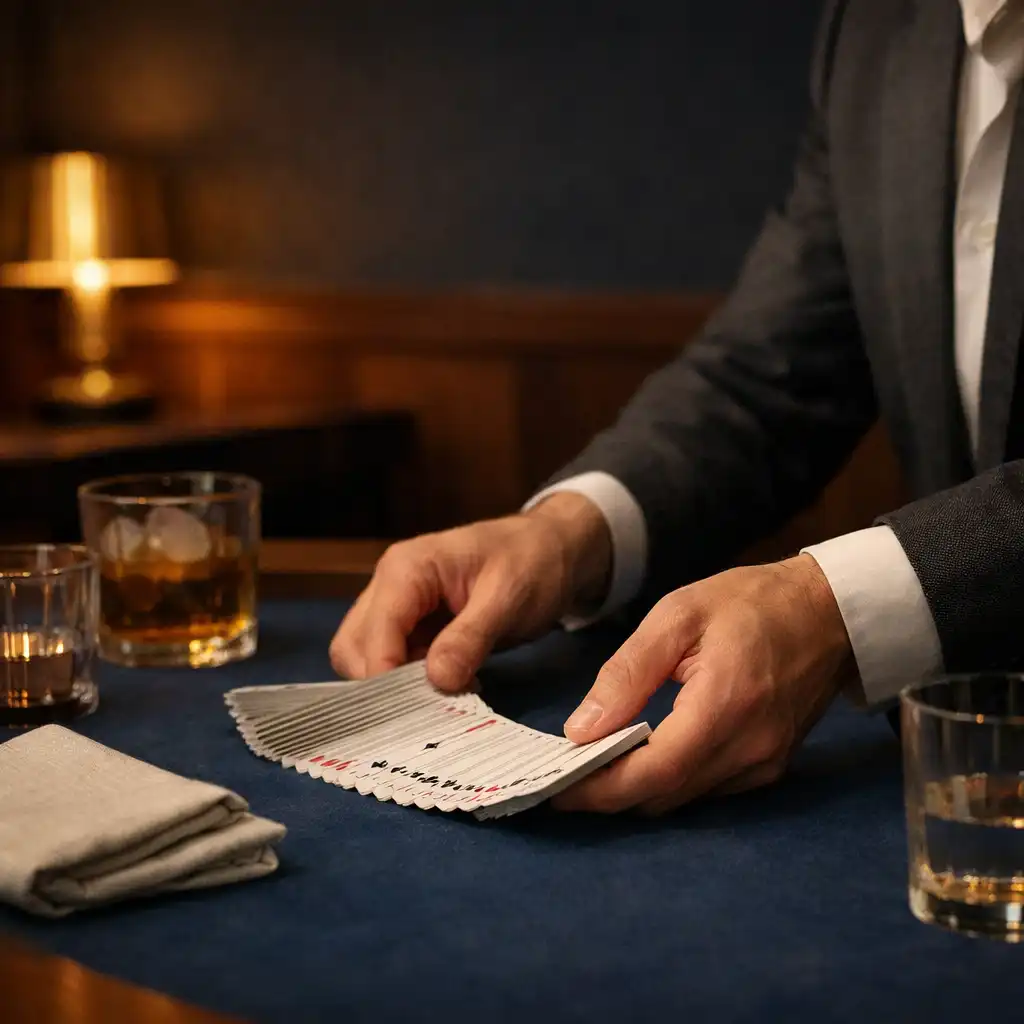
A host's hands arranging classic playing cards on a deep blue felt restaurant table.
A quiet table-setting moment, where cards, linen and glassware share the same attentive frame.

Ranks 07–10

The open-chair classics

The closing ranks widen the invitation, moving from shared structure toward games that make it easy for a mixed table to find its way in.

07

Whist

Whist carries a classic calm that can help a group settle into its own rhythm. There is a pleasing steadiness to returning to the same table with familiar company, allowing conversation to breathe around the moments of attention. For guests who enjoy a little shared structure without a heavy atmosphere, it offers an old-fashioned sense of togetherness: attentive enough to be absorbing, open enough to leave space for the room, the meal and the people beside you.

Social cue: a calm group rhythm

08

Pinochle

Pinochle suits a table that enjoys recognition, partnership and the slow build of a friendly exchange. Its social quality lies in the way people learn the group’s rhythm together, noticing familiar gestures and sharing a longer conversation across the setting. It can feel particularly welcoming when the company already has stories to trade, because the game gives those stories a gentle structure without closing the circle. The pleasure is a table that stays engaged with one another.

Social cue: partnership and shared memory

09

Go Fish

Go Fish is an easy invitation to join. Its clear turns make the table legible to newcomers, while its lightness leaves plenty of room for laughter and conversation. That is useful when a group includes different levels of experience or simply wants a small social thread beside dinner. Nobody needs to make a grand entrance into the ritual; a question across the table can be enough to begin, and the mood can stay relaxed from there.

Social cue: simple turns, open seats

10

Old Maid

Old Maid closes the list with familiar, playful storytelling. It is a low-pressure group moment that can make space for easy humour, especially when the point is simply to share a table well. Its enduring appeal is not complexity but recognition: people know how to approach it, adapt it to the company and let it become part of an evening’s memory. In that sense, it is a fitting final reminder that an open chair can be the most welcoming feature of all.

Social cue: playful stories for the whole table

In person, by design

The table is shared here

Best 10 Rankings is an offline-only restaurant experience. Card games, poker-table ambience and hosted table moments happen face to face, at the restaurant: alongside shared food, eye contact, a measured table pace and the atmosphere of the room. There is no remote participation or online poker here. The point is a real table and the people gathered around it.

Bring the table together when you are ready to shape an occasion.

Continue the evening

Build an evening around the table

Rank 01 / Rummy

Start with a considered pour

Rummy’s easy rhythm suits a dinner plan that leaves room for conversation to develop. For another perspective on pacing an evening, visit our wine-pairing editorial and use its ideas as dining inspiration, without needing to make the table feel prescribed.

Read Top 10 Wine Pairings

Rank 02 / Bridge

Set the rhythm together

Bridge’s partnered attention has much in common with small shared rituals: a table settled, a group noticing one another and a room allowed to stay composed. Explore the card-lounge journal for more reflections on atmosphere and unhurried gathering.

Read Best 10 Card Lounge Rituals

Ranks 09–10

Make room for the group

The open-chair appeal of Go Fish and Old Maid can give a group meal an easy social thread. If you are considering a gathering, private group dining is the natural next page for thinking through a shared, in-person table occasion.

Explore Private Group Dining

A gentle sequence

An evening has its own pace

A memorable table does not need a fixed script. It can simply leave enough space for dinner, company and a shared ritual to find one another naturally.

01

Arrive with room to settle

Begin with an unhurried mindset. Let the conversation and room atmosphere establish the tone before cards enter the scene. Some tables will want only dinner and talk; others may find that a deck offers a small, familiar way to gather attention. Both belong to an evening that feels present and welcoming.

02

Let the table find a rhythm

When the moment feels right, a classic game can become a shared thread between dining moments. Joining is optional, and the point is conversation rather than keeping everyone occupied. The ranking above is simply a starting place for noticing which pace and table size might feel most natural to your group.

03

Leave with the story, not the score

As the evening draws on, let the ritual loosen back into conversation. The lasting part is often a small exchange, an unexpected laugh or the memory of a table shared in person. That is the card-lounge atmosphere worth carrying with you.

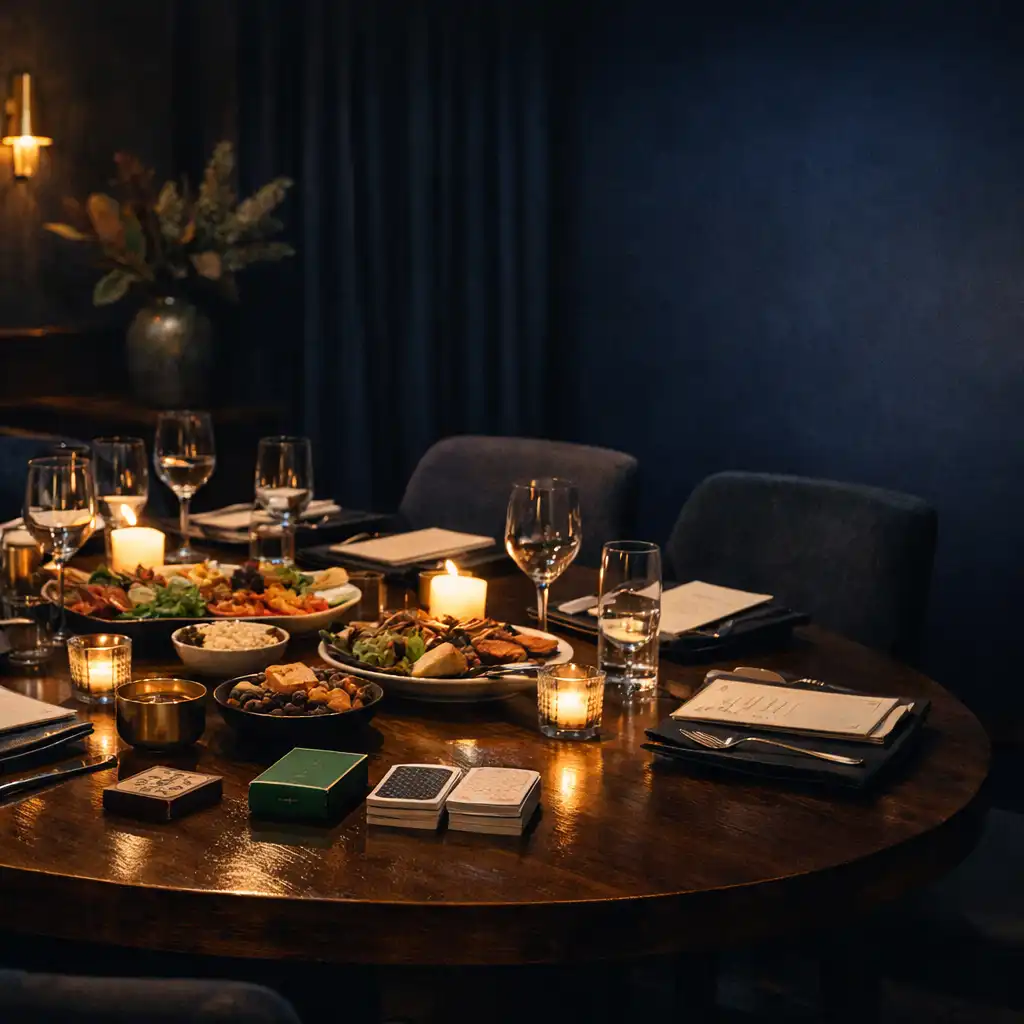
A private restaurant dining room prepared with an oval timber table, shared plates, cards and low candlelight.

Private dining

Gather around something real

For groups seeking a more considered dinner, private group dining offers a clear place to continue the conversation. Card-table atmosphere can be one possible shared thread, never a requirement or a promise. What matters is the occasion itself: the table is shared in person at the restaurant, with room for food, company and the kind of evening that stays with people after they leave.

Explore private group dining

“The best games give a table a small shared language.”

That is why classic cards still belong in an atmospheric dining journal: they make room for attention, stories and the pleasure of being together. Continue with our reflections on the rituals that shape a card lounge.

Explore Best 10 Card Lounge Rituals